
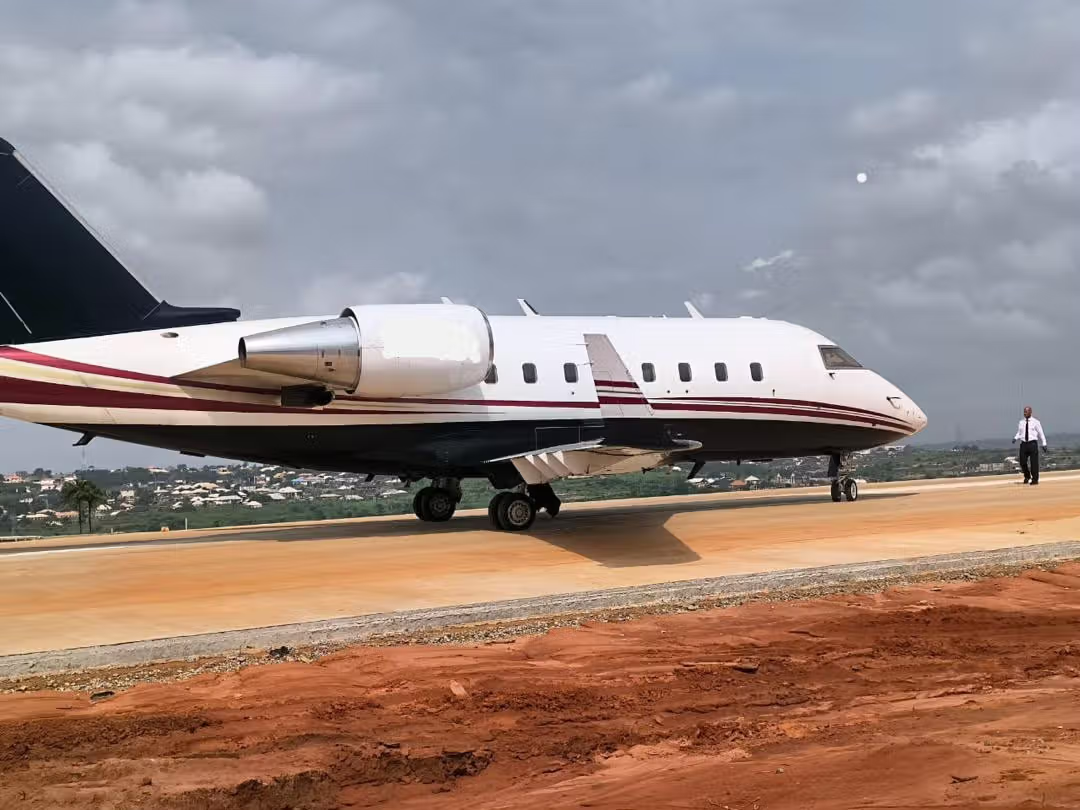
The reported landing of an aircraft on the Asaba-Ogwashi-Uku highway has continued to raise serious questions that cannot be swept under the carpet. While authorities have reportedly arrested the pilot, many Nigerians are asking whether the arrest is being used to distract attention from bigger and more important questions.
The central question is simple: How does an aircraft end up landing on a highway without a chain of approvals, flight records, air traffic communications, and regulatory oversight?
Before Nigerians are asked to accept official explanations, several critical questions must be answered.
First, where did the aircraft originate from? Aircraft do not materialize in the sky. Every flight has a departure point, a flight path, and records. The public deserves to know where this aircraft took off from and under what circumstances.
Second, who authorized the flight? Aviation operations are governed by strict regulations. Did the aircraft receive the necessary permits? Which authorities monitored its movement? Were aviation regulators aware of the flight before it appeared over Delta State?
Third, who was on board? Nigerians deserve transparency regarding the identities of the passengers. Were there passengers, cargo handlers, or other individuals connected to the operation? The public should not be left to speculate.
Fourth, what exactly was the purpose of the flight? Was it a private operation, a commercial mission, a training exercise, or something else entirely? If cargo was involved, what was being transported and for whom?
Perhaps most puzzling is the claim that the aircraft later departed and flew to Lagos. If this is accurate, it raises even more questions.
An aircraft capable of taking off again immediately after landing on a highway hardly resembles a wrecked plane or an aircraft that simply lost its way. How was it cleared to continue its journey? Who authorized the departure? What inspections were conducted before takeoff?
The Nigerian public deserves detailed answers from the aviation authorities led by Minister of Aviation, Festus Keyamo. Transparency is not optional in matters involving national airspace, public safety, and aviation security.
This is not about rushing to conclusions. It is about accountability. Arresting a pilot may create headlines, but it does not answer the fundamental questions surrounding the incident.
Until aviation authorities provide a comprehensive public briefing covering the aircraft’s origin, flight approvals, passengers, cargo, communication records, and eventual destination, suspicions and speculation will continue to grow.
In a democracy, unanswered questions are fertile ground for public distrust. Nigerians deserve facts, not fragments. They deserve transparency, not secrecy. And they deserve a full account of what really happened on the Asaba-Ogwashi-Uku highway.
The burden of explanation rests with those entrusted to regulate Nigeria’s skies.


